Depictions of cancer on television have not always been the most accurate portrayals in the past.
Fortunately, the tides have turned, as writers use experts as reference points to ensure that characters diagnosed with cancer have genuine storylines with accurate medical details in the fictional cancer narrative.
Not only is it dangerous to spread false narratives, but disseminating valuable information and raising awareness is vital.

Not all specialists agree that TV portrayals of cancer are as accurate as they need to be in terms of actually living with it instead of using it as a tragic plot.
However, seeing characters diagnosed with cancer who aren’t solely defined by it can be good.
That was almost nonexistent a couple of decades ago, and we want to share those stories of strength!
Firefly Lane — Kate Mularkey

In Firefly Lane, Kate Mularkey (Sarah Chalke) is diagnosed with a rare and aggressive form of Stage 3 breast cancer, which I did not see coming, while amid a horrible fight with her childhood best friend, Tully (Katherine Heigl).
The two are not even on speaking terms, but of course, Tully is one of the first people she wants to tell and would be the person by her side.
Naturally, Kate’s whole perspective on life changes, along with her mindset, when it comes to Tully and their argument. Her outlook has shifted, and she is following her instinct to reach out to Tully, who is in Antarctica and cannot be reached.
It is one of the most powerful depictions of cancer from a friend’s perspective. It shows that, ultimately, we will always want “our person” when things get tough.
Also, it shows the instinct some may have to downplay what was happening and put on a brave face, knowing her loved ones were worried.
The Summer I Turned Pretty — Susannah Fisher

Susannah Fisher, a mom and best friend, is diagnosed with breast cancer in The Summer I Turned Pretty.
It is a fictional cancer narrative that also shows the crushing hope that comes with being in remission and then having it come back, and this time, it is unquestionably terminal.
The second time around, we see how someone not only diagnosed with cancer copes but halso ow two teenage sons, an ex-husband, and a best friend cope as well.
She tells everyone that she will continue to fight as best she can, but refuses to put any more poison into her body or spend any more time in the hospital. She wants to be with the people she cares about most.
As someone who lost their mom at the age of 23 to cancer, she was done with treatment and hospitals after one visit. And I couldn’t blame her. The side effects, environment, and everything else are just miserable.
It depicts how we can only fight for our lives in the name of our loved ones for so long until something has to give, and we spend our last moments exactly how we want.
Izzie Stevens — Grey’s Anatomy

Izzie Stevens’ fictional cancer narrative on Grey’s Anatomy gave her extremely slim chances of survival. Diagnosed with Stage 4 metastatic melanoma, she had to have two tumors removed by the one and only Dr. Derek Shepard.
When she thinks she is dying, Izzie decides to marry Alex. It is one of the depictions of cancer on television that highlights a young person struggling with everything that comes along with the disease.
She has to face hair loss, chemo, preserving her fertility, accepting that not all of life’s “important milestones” have been hit, and the harsh reality of explaining to her mother how serious her type of skin cancer is.
She also had the interns diagnose her cancer, and that was one of the hardest-hitting moments from all the TV characters with cancer. It also highlights how much of a toll cancer can take on a relationship.
She leaves Seattle after being fired, writing Alex a letter explaining her departure. Her exit and how she lives her life thereafter reflect the renewal that comes with remission. Izzie then becomes a surgical oncologist, which is also an interesting angle.
William Hill — This Is Us

William Hill’s Stage 4 stomach cancer was one of the most emotional storylines on This Is Us. William’s fictional cancer narrative details how life is short and how it needs to be appreciated while it can be because we don’t have all the time in the world.
Unfortunately, after the show ended, Ron Cephas Jones, who played William Hill, died at age 66 from a long-standing pulmonary issue. The series is known for taking big swings, but this may have been the biggest.
However, it adds a depth that makes what he said on the show about his feelings surrounding the fact he was dying even more cogent.
It is one of those TV portrayals of cancer that reveals a hard truth: there is no cure, and treatment is difficult. Sometimes, ending treatments and spending your final moments recounting and sharing the best parts of your life can be the best medicine.
Lynette Scavo — Desperate Housewives

Lynette Scavo finds out she has Hodgkin’s lymphoma after going in for a CAT scan due to a bad fall in Desperate Housewives, which is a surprising and scary moment. It is also how some people end up finding out about their cancer.
She decides to hide her diagnosis because she doesn’t want pity. My mom made the same choice for the same reason, making Lynette’s decision understandable.
Her diagnosis was also one of the first depictions of cancer on television involving lymphoma by a significant character on network TV since Murphy Brown.
It is one of the TV portrayals of cancer that acknowledges how costly treatment can be, especially for Hodgkin’s lymphoma, which requires extensive medical care.
It also means patients cannot work, creating even more financial strain.
The Scavos end up asking a couple of family members for a loan, which can be considered uncomfortable and challenging, but realistic.
Lynette also lives with the fear of her cancer returning, even after being cleared, as we see at the beginning of her pregnancy with her twins.
Samantha Jones — Sex in the City

Samantha Jones’ cancer diagnosis is one of the most tragic moments in Sex and the City. She is known for being career-focused, independent, and risqué. However, this means that she has to face this journey alone.
Of course, her friends are there for support, but it’s not the same.
We see her engage in self-reflection and analysis of what matters in life, something many people diagnosed with cancer do, I think, instinctively.
One unique angle Samantha takes is to build a platform centered on speaking about breast cancer humorously, which brings both humor and solidarity to the topic.
In one moment, she removes her wig, revealing her baldness, while delivering a speech, and the other women are inspired to follow suit. This was big for Samantha because her hair is a distinctive attribute of the character.
Although characteristics like hair don’t mean much at the end of the day when one is facing the battle of cancer, and typically that is quickly realized, it doesn’t make losing something you cherish any easier in those first moments.
Celia Hodes — Weeds

Celia Hodes constantly tries to undermine Nancy and the other characters on Weeds. She is easy to hate for many reasons.
She shipped off her older daughter and is extremely harsh to her younger daughter about her weight. She’s controlling, abrasive, judgmental, and unsympathetic.
However, she brought an element to the show that was sorely missed when Elizabeth Perkins left the series.
Although she was a character meant for fans to dislike, she did grow on many. Or at least have a love-hate relationship. And for all the horrible things she did, karma gave it back to her way worse.
Some storylines humanized her, one of them being her diagnosis of breast cancer.
Forced to be one of the TV characters with cancer who had to deeply reexamine her life and attitude, we see Celia go from evil to fun and loving. She wants to relax and change, but that’s a tall glass.
During this time, we saw some of her better parts, like when she tells Shane to let his freak flag fly, that things like having a dead parent [Shane] and having cancer make other people uncomfortable, but why pretend to be normal when you can be your strange self, even if the scenarios are a b**** to deal with.
She embraces having a double mastectomy, saying she is thinking of going freakshow big, 47-triple-Fs, so large that other smaller breasts will want to orbit them.
While her more accepting side doesn’t last, she is one of the few TV portrayals of cancer that shows how even someone as hateful as her can put things into perspective when necessary.
Dr. Mark Greene — ER

Dr. Greene is one of the characters diagnosed with cancer whose journey is full of ups and downs. While stitching a patient on ER, he loses control of his mental and physical capabilities.
A CT scan and biopsy reveal he has an aggressive form of brain cancer called glioblastoma multiforme. Aside from pancreatic cancer, malignant brain tumors have a worse survival rate than all other cancers and have lasting and life-changing cognitive, physical, and psychological impacts.
Dr. Greene’s tumor is deemed inoperable. However, a second opinion gives hope when he is told that it is near a critical part of the brain, but it hasn’t invaded it yet, and the doctor can operate.
He has one of the most vital TV portrayals of cancer because it brings some hope to a very grim diagnosis, highlights how getting a second opinion can be worth it, and just how severe and robust the effects of brain cancer are.
After the successful surgery, it takes some time for him to return to his usual self.
Although the tumor regrew and is inoperable this time, he got married and saw the birth of his daughter when he was initially supposed to die a year ago.
Cathy Jamison — The Big C

The Showtime cancer-centered comedy series The Big C is revolutionary in many ways and has been deemed one of the best depictions of cancer on television, even if pairing humor with cancer isn’t for everyone.
It brings cancer to the mainstream, raising awareness and conversation. It is one of the best depictions of cancer on television, illustrating the emotional rollercoaster of the diagnosis. Also, a portion of the series’ soundtrack album proceeds was donated to Stand Up to Cancer.
It begins with Cathy making the understandable decision not to receive treatment for her advanced melanoma because she doesn’t want to get sicker while trying to get better, rather than end up dying anyway.
She pushes her boundaries despite how uncomfortable the situation is. She is one of the most powerful TV portrayals of cancer in terms of re-evaluating one’s own life.
The relatability comes from how she uses her illness to remind herself of how she wants to live. It is spot on with how multifaceted cancer is and how every individual case is, even with the same stage and kind of cancer.
April Carver — Chasing Life

April Carver fights leukemia in Chasing Life, and, as the title suggests, the series follows her journey to chase life after her transformative diagnosis.
Italia Ricci takes her role exceptionally seriously as one of the characters diagnosed with cancer in the public eye.
April is a young adult whose life has just begun to improve when she finds out she has leukemia, which she rejects at first, not telling her family.
The show doesn’t boast to be a cancer drama, but it does bring conversation and insight, and examines the grimmer side effects of cancer, emotionally and physically.
It has mixed reviews for its portrayal of cancer, but that also depends on one’s experience.
It does a great job at hammering its message as one of the more powerful depictions of cancer, that just because someone is diagnosed with cancer doesn’t mean that is all they are, and that life can, and does, go on still.
Gary Mendez & Margaret “Maggie” Bloom — A Million Little Things

In A Million Little Things, Gary Mendez is a breast cancer survivor who is later diagnosed with terminal lung cancer.
AMLT does an incredible job of storytelling in its TV portrayals of cancer.
As much as the show is about cancer, it also discusses suicide just as much.
One of its unique angles is the fact that a man is seen battling breast cancer, and it does a good job of showcasing that and how he constantly feared the return of it throughout the entire series.

Unfortunately, it does return, and the side effects of his treatment are not sugar-coated.
His journey is devastating, and it is easy to connect with his character, become invested, and feel the worry and concern he does.
It also extends to Maggie, whom Gary meets at a cancer survivor group. Her cancer also returns, but she does go back into remission. With the help of Gary and their friends, we see her journey as she battles it.
Through these characters diagnosed with cancer, we get a very realistic, and at times very bleak, look at what it’s like for cancer survivors and their loved ones.
Hunter Cole — Red Band Society

In Red Band Society, we see a different perspective than most depictions of cancer on television since Hunter Cole doesn’t currently have cancer. Still, his liver is failing due to his past leukemia treatments.
Hunter needs a liver transplant and is currently in the pediatric ward of Ocean Park Hospital. The show’s concept is extraordinary: it focuses on sick teenagers living together as patients, dealing with their illnesses and being teenagers.
With Hunter, fans also see how his sister wants to give him part of her liver, but is afraid because the surgery has the potential to kill her.
This is a struggle most can only imagine, but it is a real situation that is hard to understand unless one is actually living it.
Regardless of his health, he still makes trouble and lives life to the fullest, even falling in love.
Its positive message of making the best of your circumstances inspires, and it doesn’t matter how short someone’s time in your life is; their impact can last forever.
Katherine Anne “Kitty” McCallister — Brothers & Sisters

In Brothers & Sisters, powerful depictions of cancer, Kitty McCallister is diagnosed with Non-Hodgkin’s Lymphoma. One compelling angle is that, while this is happening, she and her husband are at odds because of her emotional affair.
However, this makes her husband, Robert, realize how precious life is and forgive her and promise they will fight it together.
It is also one of the TV portrayals of cancer that reveals the harsh physical and psychological tolls treatment takes on a person. She loses her hair and is in a weakened state, but the grim news seems to bring her and Robert closer.
When she learns that the treatment isn’t working, she doesn’t want to tell her family since she thinks it would ruin her brother’s wedding.
Unfortunately, she passes out, resulting in her being brought to the hospital, where she is told her cancer has not only advanced but has also spread, and she is now in need of a risky bone marrow transplant.
The only match is her half-brother, who doesn’t want to donate because he blames their family for his mother’s suicide. This complex family dynamic offers an interesting perspective that we rarely see in television depictions of cancer.
Raj Kher — 90210

It’s not too often that teenagers are diagnosed with cancer, but in 90210 Raj Kher is one of the characters diagnosed with cancer at a very young age.
Raj’s storyline hits numerous beats, from treating the chronic pain with medical marijuana to marrying his current girlfriend Ivy, to then the two not being able to afford experimental treatments.
It also shows how difficult it is to confront the reality that death looms when Ivy’s school’s prom theme is “The Future Is Ours.” He starts to drink and pushes Ivy away because he doesn’t want her to have to deal with what he is going through.
In a moment of true solidarity, their friends host a talent show to raise money for the treatments, which is met, and after the treatment, he is cancer-free. Still, a whole new set of drama between the couple ensues until he finds out that his cancer didn’t go away.
Instead of telling Ivy, he breaks up with her and leaves, only to be found by his friends in a hospital, at which point the two reunite.
His frustration with his illness is understandable, and even though his toxic behavior rubs some fans the wrong way, who’s to say how anybody should act when facing what Raj is?
Kristina Braverman — Parenthood

Kristina Braverman’s fictional cancer narrative on Parenthood is one centered on family. She finds out she has breast cancer after sending her oldest child to college and shortly after having her youngest.
The series’ family-centric dynamic is truly emotional. They all rally around her. Her oldest daughter, Hattie, leaves school and takes a semester off to help where she can.
She surprises her parents with her arrival in a very tear-jerking scene.
While she’s sick, Christina records videos for her kids to watch in case she does die, and regardless of how many times the show is rewatched, it gets viewers every time.
I, too, was in college when I found out about my mother, and I dropped everything to take care of her, so this is one of the most powerful depictions of cancer on television that is emotional and touching, especially if there is a connection.
Sonya Rebecchi — Neighbours
In the Australian soap opera Neighbours, Sonya Rebecchi is diagnosed with ovarian cancer. Compared with Days of Our Lives, TV portrayals of cancer and medical storylines are handled much more realistically.
The most heartbreaking one they’ve ever had was Sonya’s fictional cancer narrative. Its harrowing nature stems from how realistic it is, starting with her stomach pains, which she isn’t taking seriously until she can’t ignore them anymore.

By this point, she is in Stage 4 and has little time left. Everyone blows off stomach pains, and they are easy to ignore, which is why it hits she is one of the characters diagnosed with cancer that hits home so well.
From her diagnosis to the decisions she has to make to her death, the show’s commitment to being true to life doesn’t stop.
Even after her death, the storyline isn’t dropped like many soaps tend to do. Her husband has maintained a foundation named after her, which educates people about cancer.
We even see how important raising awareness about cancer is when a younger character learns he has testicular cancer, which was another of the characters diagnosed with cancer that was depicted matter-of-factly.
The period from Sonya’s diagnosis to death is so real and powerful that it is almost hard to watch.
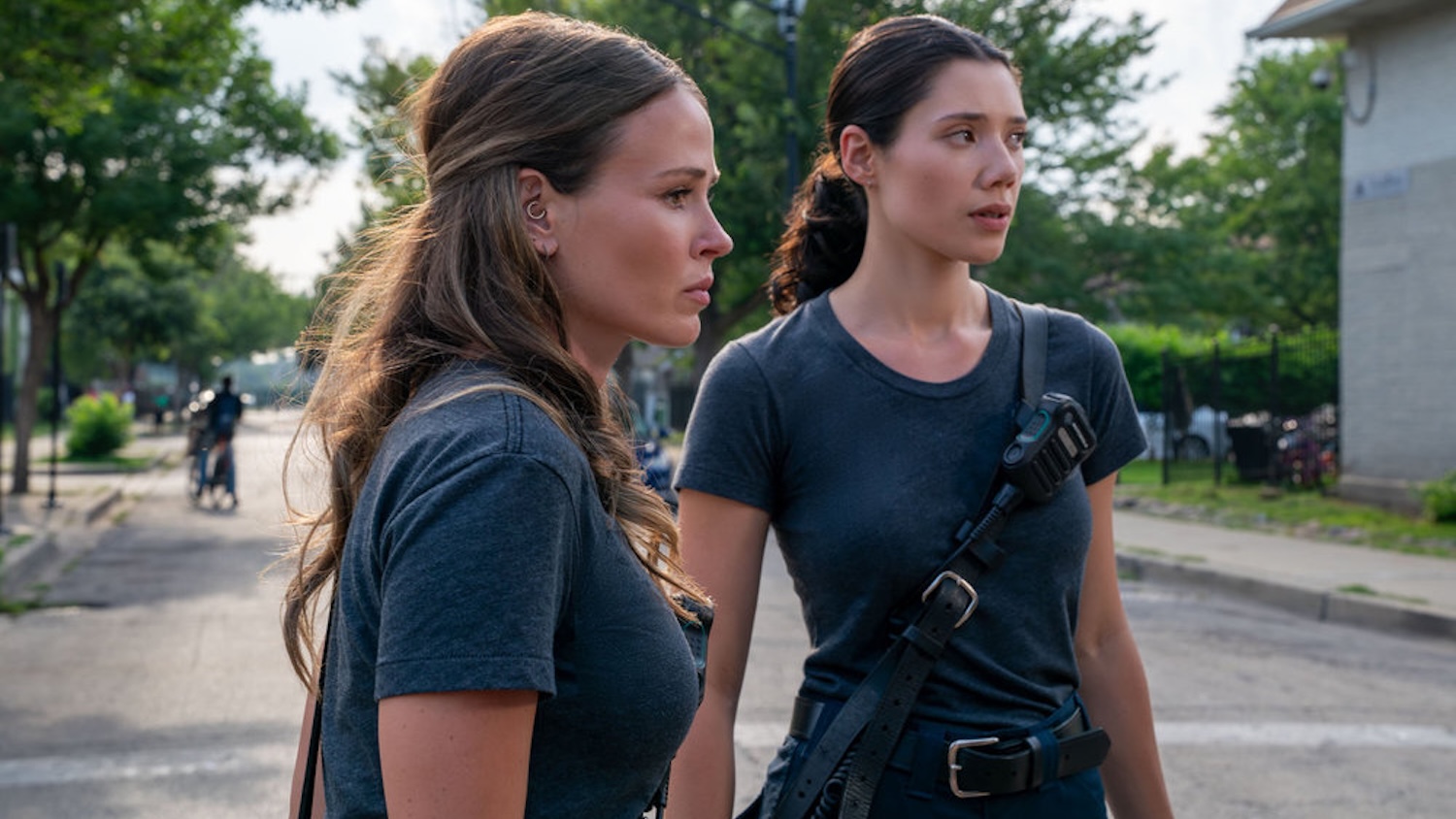
Maggie Lockwood — Chicago Med

In an interesting twist by Chicago Med, Maggie Lockwood is diagnosed with breast cancer after an old friend, for whom she donated a kidney, comes back to the hospital and is diagnosed with cancer herself.
As in many TV portrayals of cancer, Maggie doesn’t want to worry the people around her, so she receives chemotherapy at a nearby hospital and even wears a very convincing wig to keep it a secret until she decides to reveal her diagnosis to the nursing staff.
Thankfully, the treatment works, which brings an even more interesting twist: She meets someone while receiving chemo.
We see how, even during these nerve-racking times and difficult treatments, one can still flirt and bond over a distressful shared experience.
There is also significant hope that the two eventually marry and share a healthy, loving life.
Depictions of cancer on television can go so many different ways, and regardless of the outcome, the ability to bring conversation and awareness is vital.
Everyone’s experience is different, and we hope the TV industry only continues to show characters diagnosed with cancer in an educational, accurate, and compelling manner.
Over to you, TV fanatics. Can you recall a particularly moving cancer storyline that we may have missed?
If so, please share it with us in the comments.